Recently updated planning guidance on flood risk and coastal change highlights some of the challenges faced by planners, developers and designers when considering SuDS for new schemes, says Stuart Crisp, UK manager of Advanced Drainage Systems (ADS)
In September 2025, the Government published updated guidance on how to address risks associated with flooding and coastal change during the planning process. The headline updates are related to the sequential approach to locating developments, with clarification on what a ‘reasonably available’ alternative site entails.
The guidance rightly recognises that sustainable drainage systems (SuDS) can make a significant contribution to reducing the risk of flooding, devoting a section to the deployment of SuDS. However, it also raises some questions around issues such as the interplay between water quantity and water quality, problems regarding maintenance and adoption and the consideration of engineered or grey SuDS alongside green infrastructure.
Planners, developers and those advising them must read and digest huge quantities of guidance, all of it advisory, from multiple sources when including SuDS in a new scheme. The result is likely to be that some developments that could have safely gone ahead will be turned down, while others may go ahead with sub-optimal SuDS systems, which could create problems for owners, adopting bodies and communities down the line.
What the guidance says
The flood risk and coastal change planning guidance sets out the sequential approach to locating new developments. Broadly, it says that developments should be steered towards sites with the lowest flood risk in Flood Zone 1. Where such sites aren’t available, developments can move to Flood Zone 2.
High-risk sites – Flood Zone 3 – should only be considered if there are no alternatives, and can only go ahead if the development passes the Exception Test. The test considers whether wider sustainability benefits outweigh the flood risk, whether the development will be safe for its lifetime and whether it will increase flood risks elsewhere.
Although we often think of high-risk sites as those on flood plains, the guidance says that forms of flooding other than river and tidal should be treated consistently when it comes to mapping out areas of vulnerability. This could include areas where surface water or overwhelmed sewers and drainage systems cause flooding, or could cause flooding as the effects of climate change lead to higher intensity rainfall events.
The guidance on what constitutes a ‘reasonably available’ site has been expanded in this revision to provide detail on how to choose appropriate areas of search for a planning application. It says that reasonably available sites do not have to be owned by the entity applying for planning permission and could include a collection of smaller sites.
The section on SuDS explains the purpose of SuDS and why they are important, and sets out a hierarchy of how surface water should be managed. It also provides information on how to source SuDS advice, sets out what information on SuDS should be required with a planning application, and outlines considerations around adoption and other permits that might be required.
Contained in just seven paragraphs, this section aims to highlight the issues around SuDS that need to be considered, further investigated or approved by other bodies and authorities. While it cannot be expected to be comprehensive, it does contain discrepancies and anomalies which could cause some confusion for the reader.

Green and grey
Introducing the section on SuDS (paragraph 055), the guidance recognises the fact that SuDS combine ‘a mixture of built and nature-based techniques’, designed to mimic natural drainage as far as possible. Although some experts insist that the only way is green, including the possibility of engineered or grey components is a sensible approach. While nature-based SuDS can be the best solution for some developments, there are plenty of situations where that isn’t the case.
However, the guidance does not follow through on its initial statement about using both built and nature-based techniques. The possible role of engineered solutions appears to be ignored or omitted in the rest of the section on SuDS.
Grey infrastructure can be a necessary part of a SuDS management train. For instance, where there are higher levels of pollution in surface water – for instance, in run-off from busy roads – pre-treatment is vital to protect water bodies.
For developments where land is limited, there may not be sufficient space to accommodate vegetative solutions such as ponds, swales or basins. Deploying engineered solutions, such as below-ground attenuation, can make the development commercially viable, enabling it to go ahead without adding flooding risk.
Similarly, the guidance recognises the four pillars of SuDS (paragraph 55) – water quantity, water quality, biodiversity and amenity – but doesn’t follow through on that statement. It explains how multifunctional SuDS can lead to a range of biodiversity and net gains, but only mentions water quality as something to be considered in certain situations – when protecting water quality should be factored into all SuDS design.
Where pollution loads are higher, SuDS management trains should include proprietary elements to protect green infrastructure and ecosystems whilst also helping to remove pollutants before the water reaches a watercourse or water body. As well as runoff from highways, water can contain more pollutants from commercial and industrial developments, warehousing and logistics facilities and some mixed-use developments.
Where surface water has a medium to high pollution hazard, using only vegetative SuDS can lead to contaminated soils which are saturated with pollutants which means its intrinsic ability to treat polluted water is diminished over time. Some water bodies, such as SuDS ponds, may host a toxic cocktail of harmful substances that can cause damage to plants and wildlife.
A 2004 study by the Chartered Institution of Water and Environmental Management (CIWEM) and Stormwater Shepherds found that there are over 18,000 outfalls on the strategic road network, and likely to be over 1 million on local highways, where the drains are discharging directly into watercourses, causing widespread environmental damage.
The guidance highlights the fact that an Environmental Permit from the Environment Agency may be required if water containing pollutants is discharged into water courses such as rivers or streams or directly to water underground (paragraph 61). This should, in theory, apply to discharges from highways. However, as the CIWEM / Stormwater Shepherds report demonstrates, the Environment Agency has historically turned a blind eye to the issue of contaminated run-off from roads operated by National Highways and local highways authorities.
Early design for SuDS
The guidance notes that the layout and function of SuDS should be part of the earliest design stages of a new development, as this can help optimise the benefits across the four pillars. These early decisions should be protected through design development since it is common for ‘value engineering’ – or rather cost cutting – exercises to take only water quantity into account, neglecting other pillars.
For instance, there are many instances where proprietary pre-treatment devices included in the initial design mysteriously disappear due to value engineering by the main contractor or subcontractor. As well as having an adverse effect on water quality, such decisions can also have a significant impact on the type and cost of maintenance regimes required to keep SuDS performing as designed, in terms of all four pillars.
The guidance notes that information on how SuDS have been designed to facilitate maintenance should be part of a planning application (paragraph 59). This is vitally important and is sometimes overlooked or misunderstood. There is huge variability between different types and brands of products when it comes to ease of inspection and maintenance, which should be factored in.
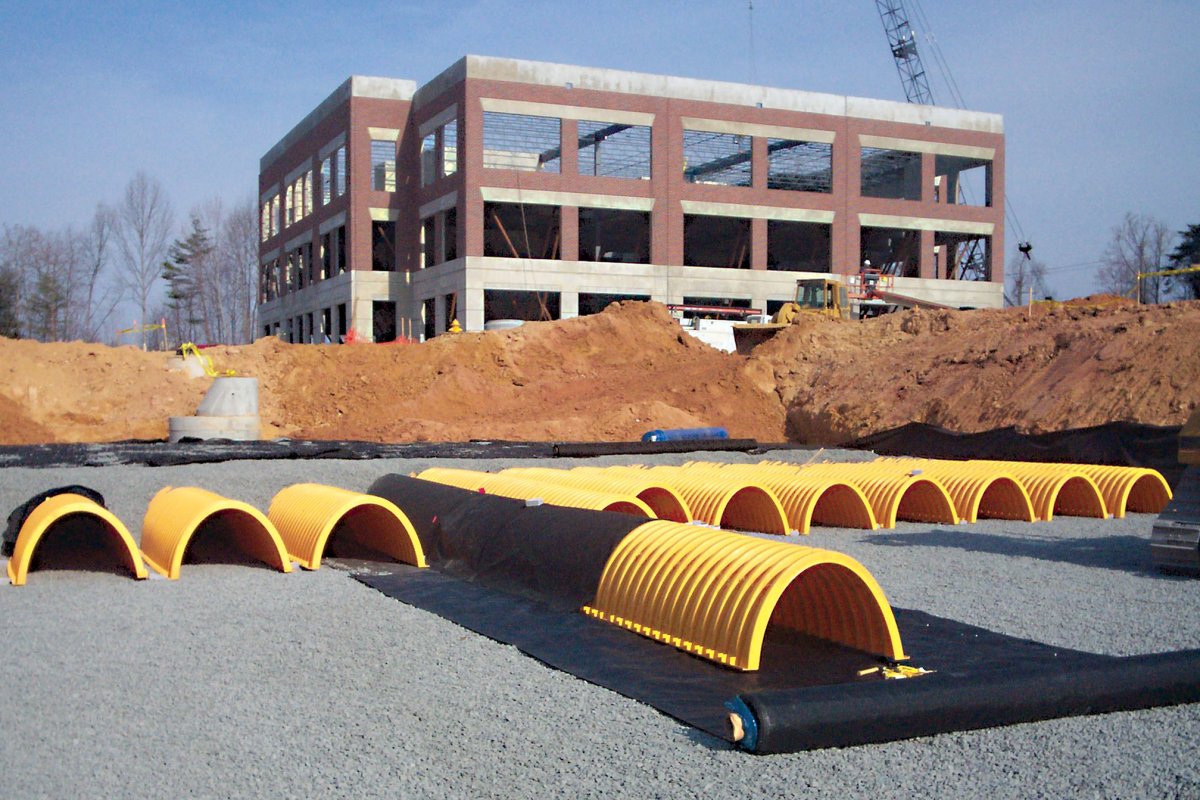
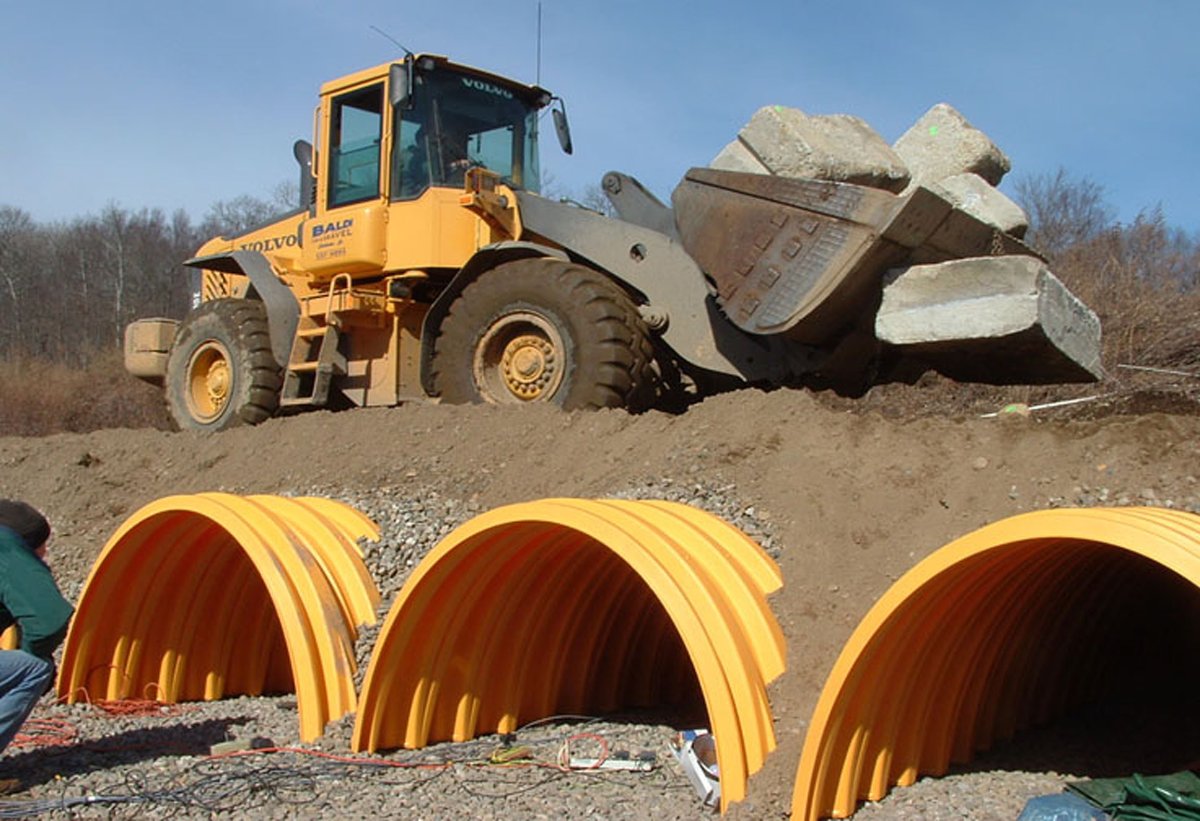
For instance, crates can lose storage volume due to sediment buildup and may not have the means for easy inspection and cleaning. Arch-shaped attenuation systems, on the other hand, can be designed to include easy access for inspection and maintenance – such as StormTech’s Isolator Row – which can be cleaned out using standard sewer cleaning equipment.
The guidance also propagates the received wisdom that natural SuDS are easier to maintain than engineered ones. This is not necessarily the case.
There are examples of SuDS ponds where sediment build-up has reduced the storage volume significantly and, in some cases, harmed plant and wildlife due to a build-up of pollutants trapped in the sediment. Often, maintenance in such cases involves the mobilisation of major plant and equipment, the logistics and cost implications of which have not been included in the design. It can also mobilise pollutants during the cleaning process, causing further harm to the environment.
Continue reading...
Read the full article in Issue 336 of Drain Trader, March 2026.